Ectopic Fat Accumulation
Insulin resistance typically starts with the accumulation of certain types of body fat. At some point in your life, you develop a habit of eating too much food. This often includes foods that are more likely to be stored as body fat, such as saturated fat, fructose, or very large carbohydrate meals. Even if you don’t overeat at meals, you can still pack on a lot of body fat just by snacking on anything that spikes your insulin, such as just about any food from the snack aisle or candy aisle at a grocery store.
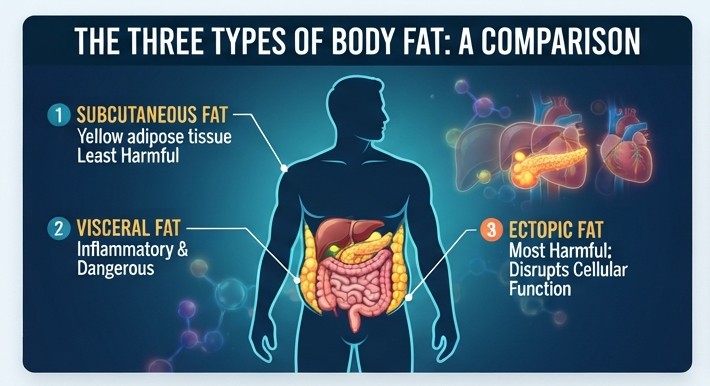
Body fat can be categorized into three separate groups based on where it is located and how it affects the rest of the body.
Subcutaneous fat is the fat that you have just under your skin. This is the least harmful place your body can store fat.
Visceral fat is the fat that surrounds your internal organs within your abdominal cavity. For example, it packs around your liver, kidneys, and intestines. Visceral fat is bad because it releases inflammatory chemicals and hormones that significantly raise the risk of insulin resistance, type 2 diabetes, heart disease, and stroke.
Ectopic fat is fat that gets deposited inside tissues and vital organs that aren’t normally supposed to store fat, such as your liver, heart, pancreas, and muscles. This is the most harmful type of fat because it interferes with cellular function, impairs insulin signaling, causes localized cell damage, and drives severe metabolic dysfunction.
When you first start overeating, or just eating junk food, your existing fat cells soak up those unnecessary calories and get fatter, as they are supposed to. However, if you do this over a long enough period, typically years and decades, more and more of that fat gets deposited as visceral fat. The stress hormone cortisol also directs more fat to be stored viscerally instead of subcutaneously. So chronic stress can cause greater visceral fat accumulation. When women transition through menopause, their estrogen levels drop, and fat distribution begins shifting more toward visceral fat instead of subcutaneous fat. Fructose and alcohol promote visceral and ectopic fat storage because they are both processed in the liver. The liver crams a lot of that fat into itself.
Chronic Low-Grade Inflammation
Visceral fat stored deep around your abdominal organs continuously releases inflammatory signaling proteins and cytokines such as tumor necrosis factor-alpha and interleukin-6. These inflammatory chemicals alter the molecular pathways that cells use to respond to insulin by binding to the receptors, causing cell distress and malfunction.
Disruption of Insulin Signaling Pathways
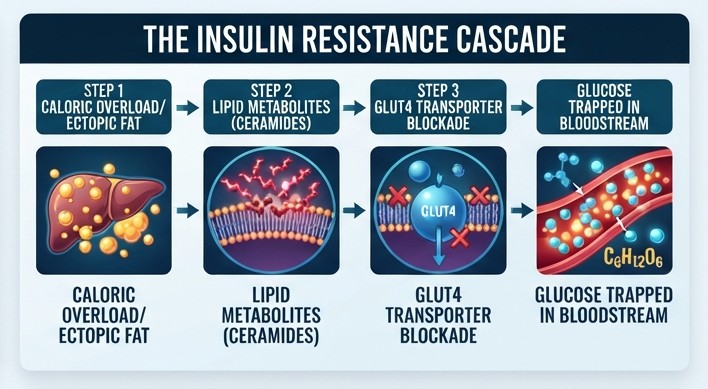
When your fat and muscle cells are highly sensitive to insulin, the presence of insulin causes the GLUT4 transporter to move to the cell surface to allow glucose in. When excess fat accumulates inside those cells, it is converted into intermediate lipid metabolites like diacylglycerols and ceramides. These metabolites interfere with the chain reaction of events that normally causes GLUT4 to move to the cell surface.
Hyerinsulinemia
Because cells are ignoring the insulin signal, blood glucose levels stay higher than the body wants them to be. To compensate, the pancreas releases more insulin, trying to force the signal through. This creates a state of sustained high insulin, called hyperinsulinemia.
A small amount of insulin no longer causes enough glucose uptake to keep blood sugar levels acceptably low. The baseline insulin level needed for certain cells to take up glucose is higher than it ideally should be. This is called insulin resistance.
Numerous Factors May Contribute To Visceral and Ectopic Fat
Visceral fat and ectopic fat can accumulate in different people under different conditions. For example, a person who is a heavy drinker can accumulate a tremendous amount of visceral and ectopic fat just from their habitual alcohol consumption. Another person can do it without drinking alcohol at all, but instead by consuming numerous sugary drinks. Yet another person could accumulate it just from eating huge meals. Snacking in between meals typically causes blood sugar spikes, insulin spikes, and fat accumulation. Snacking on things like potato chips and pretzels will certainly cause fat accumulation.
Beyond Fat
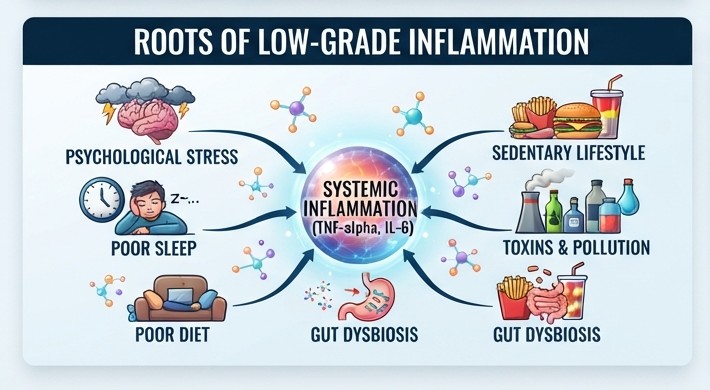
While ectopic fat and visceral fat are primary drivers of insulin resistance, other factors also influence it, such as chronic low-grade systemic inflammation, genetics, sleep quality, physical inactivity, and muscle mass.
Low-grade inflammation can be caused by things other than visceral or ectopic fat. There are many different causes of low-grade inflammation, including things such as psychological stress, air pollution and other toxins, tobacco use, advanced glycation end products from foods, periodontal disease, which allows pathogens into the bloodstream, leaky gut and gut microbiome issues, cellular senescence from aging, insufficient essential fats in the diet, etc.
Each of us has a personal fat threshold, which is the genetic limit for how much fat you can safely store subcutaneously before it begins spilling over into ectopic locations. So, you might store visceral and ectopic fat more easily than another person.
A person who is chronically sleep-deprived can develop insulin resistance because they may have higher levels of cortisol, free fatty acids in the blood, TNF-alpha, and IL-6, which can disrupt insulin signaling. It can also disrupt leptin and ghrelin levels, making them feel hungrier than they otherwise would and leading them to eat more than they should.
A person who is too sedentary can accumulate ectopic fat in their muscles just from the lack of using those muscles, even if the person doesn’t appear to be obese.
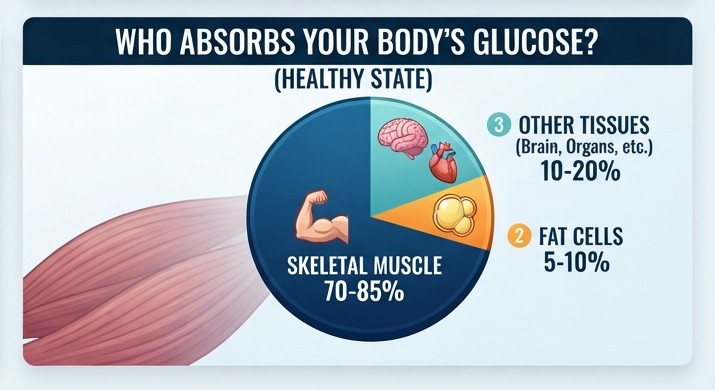
Under healthy conditions, skeletal muscle absorbs the vast majority of excess glucose from your blood, accounting for approximately 70%-85% of absorption. Fat cells typically account for only 5%-10% of glucose uptake. A person with very low muscle mass has less muscle to absorb excess glucose and therefore is more likely to ultimately end up with more ectopic fat.
For most people, more than one contributing factor causes or worsens insulin resistance. You might have too much ectopic and visceral fat causing the vast majority of your IR, but your poor sleep, daytime stress, and underwhelming amount of muscle mass could also be contributing to it in a meaningful way.